
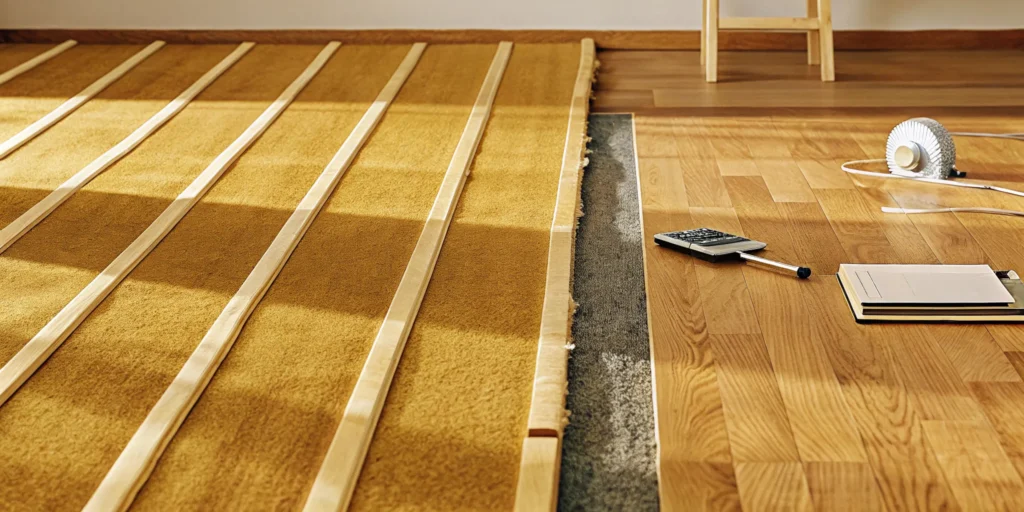
Every carpet replacement quote is built on two key components: the material you fall in love with and the skilled labor that brings it to life in your home. Understanding how these two elements work together is the secret to managing your budget effectively. For instance, a premium wool carpet in a simple, square room might have a similar final carpet installation cost to a budget-friendly nylon installed on a complex staircase. It’s all about the balance. We’ll explore how different carpet fibers, room layouts, and preparation needs influence your final number, giving you the insight to choose a beautiful floor that fits your lifestyle and your budget.
Key Takeaways
- Understand your total investment: Your final quote is shaped by two main factors: the carpet material you select and the installation specifics, including your room’s layout, the condition of your subfloor, and any complex areas like stairs.
- Request an itemized quote: A transparent estimate should clearly list all services, such as old carpet removal, furniture moving, and new padding, which helps you avoid surprise charges and accurately compare different offers.
- Prioritize long-term performance: The best value comes from choosing a carpet fiber that matches your lifestyle, investing in high-quality padding to extend its life, and hiring an insured professional who provides an installation warranty.
How Much Does Carpet Installation Really Cost?
When you’re ready for new carpet, one of the first questions you’ll have is about the total investment. While every project is unique, you can generally expect the combined expense for materials and professional installation to fall somewhere between $2 and $8 per square foot. That’s a pretty wide range, and for good reason. The final number on your quote depends on two key things: the carpet you choose and the specifics of your space.
Think of it like this: the material is what you see and feel, while the labor is the expertise that ensures it looks great and lasts for years. A high-end wool carpet in a simple, square room might have a similar total cost to a budget-friendly nylon carpet installed on a complex staircase. Understanding how these two components work together is the best way to set a realistic budget and make choices you’ll be happy with. Let’s break down how materials and room size contribute to your final quote.
Breaking Down Material vs. Labor
Every carpet replacement quote is made up of two main parts: the cost of the carpet itself and the cost for the installation service. Professional labor in the Dallas–Fort Worth area typically runs from $0.50 to $1.50 per square foot. This covers the skill and time required to properly stretch, trim, and secure your new flooring for a seamless finish.
The material expense varies much more widely and depends entirely on the fiber you select. For example, a durable and budget-conscious polyester might be less than a dollar per square foot, while a high-performance nylon can be more. At the premium end, natural fibers like wool can be a significant investment. A detailed estimate should separate these figures so you can see exactly where your money is going.
How Room Size Affects the Final Number
It makes sense that the larger the area you’re carpeting, the higher the total will be. To put it in perspective, installing new carpet in a single 12×12 bedroom (144 square feet) could land anywhere from around $300 to over $1,100, depending on the materials you choose. For a larger project, like carpeting 1,000 square feet of your home, the total could range from about $1,800 to $7,500.
However, square footage is only part of the story. The layout of your room also plays a role. A simple, rectangular room is more straightforward to install than a space with multiple closets, angles, or a staircase. These complex features require more precise cutting and fitting, which can add to the labor portion of your estimate. That’s why an in-home evaluation is so important for getting an accurate, all-inclusive number.
What Factors Influence Your Installation Quote?
When you get a quote for new carpet, you’re looking at more than just the material itself. The final number is a complete picture of your project, from the specific carpet you fall in love with to the unique layout of your home. Understanding what goes into that quote helps you see exactly where your investment is going. It’s not just about square footage; it’s about the materials, the complexity of the work, and the preparation needed to ensure your new floors look beautiful for years to come. Let’s walk through the three main factors that shape your installation quote.
The Type of Carpet You Choose
The biggest variable in your project’s total is often the carpet you select. Carpet comes in a wide range of materials, and each has a different impact on your budget and lifestyle. For example, polyester is a popular, wallet-friendly choice that works well in low-traffic areas. Nylon is a step up in durability, making it a fantastic all-rounder for busy households with kids or pets. Then you have natural fibers like wool, which is a premium option known for its luxurious feel and longevity. Your choice depends on what you need from your floor, whether it’s stain resistance for the playroom or a soft landing in the bedroom.
Your Room’s Layout and Complexity
Not all rooms are created equal. A simple, square bedroom is much more straightforward to install carpet in than a living room with a fireplace, a bay window, and an adjoining hallway. The more cuts, seams, and corners your space has, the more time and precision it takes for a flawless installation. Stairs are the perfect example of a complex job. Each step has to be cut, wrapped, and secured individually, which requires significantly more labor and skill than a flat, open area. This detailed work is essential for a professional finish and is always factored into the project scope.
The Condition of Your Subfloor
What’s underneath your old flooring is just as important as the new carpet going on top. The subfloor is the foundation of your room, and it needs to be clean, level, and structurally sound for your new carpet to perform its best. During an in-home estimate, we check for issues like water damage, squeaks, or uneven spots that need to be addressed before installation can begin. Taking care of subfloor repairs is a critical step that prevents problems down the road, ensuring your investment is built on a solid base. A healthy subfloor means a longer life for your beautiful new carpet.
How Do Different Carpet Materials Compare?
The type of fiber you choose for your carpet is one of the biggest decisions you’ll make, affecting everything from the final look and feel to the long-term durability and overall project cost. Each material comes with its own set of strengths, so the right choice really depends on your lifestyle, the room’s function, and your budget. For example, a busy hallway with kids and pets has very different needs than a quiet, formal sitting room. Understanding the core differences between the most common options helps you select a carpet that will perform well in your Dallas–Fort Worth home for years to come. Let’s look at the three main contenders: polyester, nylon, and wool.
Polyester: The Budget-Friendly Choice
If you’re looking for a soft feel without a significant upfront investment, polyester is an excellent choice. It’s known for its vibrant, fade-resistant colors and natural stain resistance, making it a solid option for bedrooms or other low-traffic areas. While it’s not as resilient as nylon, modern manufacturing has made polyester fibers much more durable than they used to be. With material costs often falling between $0.50 and $4.00 per square foot, it’s a budget-conscious solution that allows you to refresh a space without breaking the bank. It’s a practical pick for homeowners who want style and comfort at an accessible level.
Nylon: The Durable All-Rounder
Nylon is the most popular carpet fiber for a reason: it’s incredibly tough and resilient. This makes it the go-to choice for high-traffic areas like living rooms, stairs, and hallways. It stands up exceptionally well to crushing and matting from foot traffic and furniture, bouncing back to maintain its original appearance for years. While the material expense is a step up from polyester, typically between $2.00 and $7.00 per square foot, its longevity often makes it a better long-term value. For busy households in the DFW area, a quality nylon carpet replacement is a dependable investment that balances performance and comfort.
Wool: The Premium Option
For those who prioritize natural materials and a touch of luxury, wool is the ultimate choice. It’s exceptionally soft, naturally flame-retardant, and a great insulator, helping to keep rooms comfortable. Wool fibers have a unique structure that hides soil and makes them remarkably durable, so a well-maintained wool carpet can last for decades. As a premium, natural fiber, it comes with a higher material cost, generally ranging from $3.00 to over $21.00 per square foot. It’s a beautiful investment for spaces where comfort and elegance are the top priorities, like a master bedroom or a formal dining room.
Are There Hidden Fees to Watch For?
Getting a quote for new carpet is exciting, but the number you see isn’t always the final number. Some estimates leave out key services that are essential for a proper installation, leading to surprise charges later on. A trustworthy installer will walk you through every line item, but it’s always smart to know what to ask about. Being informed helps you compare quotes accurately and ensures your project stays on budget without any last-minute headaches.
The goal is to find a partner who is transparent from the start. When an installer provides a detailed, all-inclusive estimate, it shows they respect your budget and are committed to a smooth process. Let’s break down the common items that can show up as extra charges so you know exactly what to look for in your quote.
Tearing Out and Disposing of Old Carpet
Before your beautiful new carpet goes in, the old flooring has to come out. This step involves more than just pulling up the carpet; it includes removing the old padding, tack strips, and staples. It’s a labor-intensive job, and hauling away the old materials for disposal also takes time and resources. Some companies list this as a separate line item, while others might not mention it at all. Always ask if your quote includes the full carpet replacement process, from removal to disposal, so you’re not left with a surprise task or an unexpected bill.
Subfloor Repair and Preparation
A healthy subfloor is the foundation of a long-lasting carpet installation. If your subfloor is uneven, squeaky, or damaged, those issues need to be addressed before any new flooring is laid down. Minor prep work might be included in your quote, but significant repairs like replacing water-damaged plywood or leveling concrete will almost always be an additional expense. A thorough installer will inspect your subfloor during the in-home estimate and discuss any necessary repairs with you upfront. This step is non-negotiable for a quality finish that feels great underfoot for years.
Moving Furniture
Clearing a room of furniture is a big job, and many installation teams offer it as an add-on service. The charge is often determined per room or based on the amount and type of furniture. If you have heavy items like pianos, entertainment centers, or antique dressers, the cost can be higher. To manage your budget, you can ask what the charge is or plan to move the furniture yourself before the installers arrive. Clarifying this detail ahead of time prevents delays on installation day and ensures everyone is on the same page.
Installing on Stairs
Stairs are one of the trickiest areas to install carpet. Each step requires precise cutting, stretching, and securing to ensure the carpet is safe, durable, and looks seamless. This detailed work takes significantly more time and skill than installing carpet in a square room. Because of this complexity, installers have a separate charge for stairways. Whether it’s a flat rate per staircase or a cost per step, make sure this is clearly outlined in your quote if your project includes stairs.
New Padding and Trim
Carpet padding is the unsung hero of your new floor. It provides cushioning, absorbs sound, and extends the life of your carpet. While it might seem like a given, not all quotes automatically include high-quality padding. Skimping here can make your new carpet feel thin and wear out faster. Similarly, baseboards or trim may need to be removed and reinstalled. Ask what type of padding is included in your estimate and confirm whether trim work is part of the standard installation service.
Common Budgeting Mistakes to Avoid
A clear budget is your best friend during any home improvement project. When it comes to new carpet, knowing what to expect helps the entire process run smoothly, from your initial estimate to the final installation day. A few common oversights can throw a budget off track, but with a little planning, you can easily sidestep them. Thinking through the total scope of the project ensures there are no surprises, allowing you to focus on the excitement of transforming your space. Let’s walk through the most frequent budgeting mistakes so you can plan your project with confidence.
Forgetting to Account for Waste
It’s easy to measure a room and assume that’s the exact amount of carpet you’ll need, but installation always requires a bit extra. Carpet is produced in standard-width rolls, and installers have to make precise cuts to fit it perfectly around corners, in closets, and along walls. This process naturally creates leftover material, or “waste.” A good rule of thumb is to add about 10% to your material budget to cover these cuts. Factoring this in from the start prevents a last-minute budget adjustment and ensures your installation team has everything they need to do the job right.
Ignoring Necessary Prep Work
The work that happens before your new carpet is laid is just as important as the installation itself. Many homeowners forget to budget for these essential steps. This can include the labor involved in removing your old carpet and padding, disposing of the old materials, and making any necessary repairs to the subfloor underneath. If your subfloor is uneven or damaged, it must be fixed to ensure your new carpet looks great and wears evenly. These prep tasks are critical for a durable, high-quality finish, so be sure to discuss them during your in-home estimate to get a complete picture of the project.
Assuming a Quote is All-Inclusive
Not all installation quotes are created equal. A common mistake is assuming the number you see covers every single aspect of the job. To avoid confusion, you should always ask for a detailed, itemized quote that breaks down the complete investment. This document should clearly list the cost of the carpet, the padding, all labor charges, furniture moving, old flooring removal, and any subfloor preparation. A transparent quote empowers you to understand exactly what you’re paying for and helps you compare different offers accurately, ensuring there are no hidden fees down the line.
Skimping on High-Quality Padding
Carpet padding is the unsung hero of a comfortable and long-lasting floor. While it might seem like a good place to save a few dollars, choosing a lower-quality pad is a mistake in the long run. A dense, high-quality pad acts as a shock absorber, protecting your carpet fibers from crushing and wear. It also adds insulation, reduces noise, and makes the floor feel much more plush underfoot. Investing in the right carpet cushion is one of the smartest decisions you can make to protect your new carpet and get the most out of it for years to come.
How to Get the Best Value from Your New Carpet
Getting a great deal on new carpet isn’t just about the initial number on an estimate. True value comes from a floor that looks fantastic, holds up to daily life, and is installed so well you don’t have to think about it for years. It’s about making a smart investment in your home’s comfort and appeal. To do that, you need to look beyond the surface-level figures and understand what goes into a quality installation. A cheap installation that results in wrinkles, loose seams, or premature wear isn’t a bargain; it’s a headache waiting to happen.
This means comparing your options thoughtfully, knowing when to call in a pro versus tackling it yourself, and choosing a material that genuinely fits your lifestyle. A beautiful carpet that wears out in two years because it wasn’t right for a busy hallway isn’t a good value, no matter what the initial outlay was. The goal is to find that sweet spot where quality materials, expert craftsmanship, and a fair estimate align. By focusing on these key areas, you can ensure your new flooring is a source of pride and enjoyment for a long, long time. Let’s walk through how to make that happen, so you can feel confident in every step of the process.
Compare Detailed, Itemized Quotes
When you start gathering estimates, don’t just look at the final number. Ask each company for a detailed, itemized quote that breaks everything down. This should include the carpet itself, the padding, labor, removal and disposal of your old flooring, and any potential subfloor prep. A transparent quote is a sign of a trustworthy installer. It helps you accurately compare what you’re getting from different companies and prevents surprise fees from popping up later. A clear breakdown ensures you’re comparing apples to apples and making a decision based on complete information. Ready to get a clear, straightforward estimate? We offer a free in-home estimate to give you a complete picture.
Understand the Limits of a DIY Project
It can be tempting to install carpet yourself to save on labor, but it’s a project that requires specialized tools and a lot of precision. An improper installation can lead to wrinkles, visible seams, and a carpet that wears out much faster than it should. While you might save money upfront, the expense of fixing mistakes or replacing the carpet sooner often outweighs the initial savings. For most homeowners in the Dallas-Fort Worth area, a professional installation is the best way to protect your investment. It ensures the job is done right the first time, giving you a flawless finish and peace of mind.
Choose the Right Carpet for Long-Term Performance
The type of carpet you select has a huge impact on its longevity, feel, and how easy it is to maintain. Think about the room where it’s being installed. A busy living room or hallway with lots of foot traffic needs a durable, resilient option like nylon. A cozy, low-traffic bedroom might be perfect for a softer polyester. Don’t just choose based on color; consider the fiber, pile height, and density. Making the right choice upfront means you’ll have a floor that not only looks great on day one but continues to perform well for years. Our team can help you explore options during your carpet replacement consultation to find the perfect fit for your home.
How to Choose the Right Carpet Installer
Selecting the right carpet is only half the battle; the quality of the installation determines how it will look and perform for years to come. A sloppy installation can lead to wrinkles, visible seams, and a shorter lifespan for your new flooring, no matter how great the material is. Finding a professional you can trust is key to a smooth, stress-free project and a beautiful, long-lasting result. The difference between a DIY job and a professional one often comes down to the details: how well the carpet is stretched, how cleanly the edges are tucked, and how invisible the seams are.
A great installer does more than just lay carpet. They are a craftsperson who prepares the subfloor correctly, uses specialized tools, and has the expertise to handle tricky layouts, stairs, and transitions. They can spot potential issues before they become problems, like an uneven subfloor that needs leveling or moisture concerns that must be addressed. They are your partner in the project, ensuring every detail is handled correctly from start to finish. When you’re looking for a carpet installer in the Dallas–Fort Worth area, focus on a few key areas to ensure you’re working with a true professional. By asking the right questions and knowing what to look for, you can feel confident that your investment is in good hands and that your new carpet will look fantastic.
Verify Their Credentials and Insurance
Before letting any contractor work in your home, you should always confirm they are properly insured. Ask for proof of general liability and worker’s compensation insurance. This protects you from any liability in case of an accident or damage to your property during the installation. A professional company will have this documentation ready and will be happy to provide it. You can also check online reviews and ask for references to get a feel for their reputation and the quality of their work. A little due diligence upfront gives you peace of mind and ensures you’re working with a legitimate, trustworthy team of installers.
Ask About Installation Warranties
A reputable installer will always stand behind their work with an installation warranty. This is separate from the manufacturer’s warranty, which covers defects in the carpet itself. An installation warranty covers the quality of the labor, protecting your investment against issues like loose seams, wrinkles, or problems at transition points. Professional installers offer this because they have the expertise and proper tools to do the job right the first time. Be sure to ask what the warranty covers and how long it lasts. Getting these details in writing ensures you know exactly what to expect and that your new carpet flooring is protected.
Get a Thorough In-Home Estimate
A quote given over the phone is just a guess. A true professional will insist on an in-home estimate to provide an accurate project total. This allows them to measure your rooms precisely, assess the condition of your subfloor, and identify any potential challenges, like complex room layouts or difficult stairs. Your estimate should be a detailed, itemized breakdown of all costs, including the carpet, padding, labor, removal of old flooring, and any necessary subfloor prep. This transparency is the hallmark of a trustworthy installer and helps you avoid surprise fees later. A clear, all-inclusive quote ensures everyone is on the same page before work begins.
Get a Carpet You’ll Love for Years
Choosing a new carpet is about more than just picking a color you like. It’s an investment in your home’s comfort and style for the next decade or more. To make sure you’re happy with your decision long after installation day, it helps to think about the bigger picture. By focusing on lasting value, planning for simple upkeep, and working with a skilled installer, you can ensure your new carpet looks and feels great for years to come.
Focus on Long-Term Value
The initial amount on your quote is only one piece of the puzzle. The type of carpet you pick has a huge impact on how long it lasts, how it feels underfoot, and how easy it is to clean. For example, a high-quality wool carpet might require a larger upfront investment, but its natural durability means it could outlast less expensive options by years. On the other hand, budget-friendly materials like polyester can be a great fit for lower-traffic areas. Thinking about how you use a room helps you choose a carpet that delivers the best return for your home.
Plan for Proper Maintenance
Once your beautiful new carpet is installed, a little care goes a long way. Simple habits can keep it looking fresh and extend its life significantly. Try to vacuum high-traffic areas, like hallways and living rooms, a couple of times a week and other rooms weekly. If a spill happens, blot it gently with a clean cloth right away instead of rubbing, which can push the stain deeper. And don’t forget what’s underneath. Investing in quality padding not only adds extra cushion but also makes your carpet last longer by absorbing impact and reducing wear.
Partner with a Pro for a Flawless Finish
While a DIY approach can seem tempting, carpet installation is a skill that requires precision and specialized tools. For most homeowners, hiring a professional is the best way to get a seamless, beautiful result. An experienced installer knows how to handle tricky layouts, pattern matching, and stairs, ensuring a tight, wrinkle-free fit. At Next Day Flooring, our team handles every detail, from subfloor prep to the final trim. A professional installation protects your investment and gives you peace of mind knowing the job was done right.
Related Articles
Frequently Asked Questions
Why can’t I just get a quote over the phone? A quick phone estimate can only give you a rough idea of the total investment. An accurate, all-inclusive quote requires seeing the space in person. This allows an expert to take precise measurements, check the condition of your subfloor, and account for details like closets, stairs, or unique room angles. An in-home evaluation ensures the final number you see is the number you pay, without any surprises on installation day.
Is it worth paying more for nylon carpet instead of polyester? The best choice really depends on how you use the room. Polyester is a great, budget-conscious option for low-traffic spaces like guest rooms because it’s soft and naturally stain-resistant. For busy areas like hallways, stairs, or a family living room, nylon is often a better long-term investment. It’s incredibly resilient and holds up much better to heavy foot traffic, meaning it will keep its original look for longer.
What does a “standard” installation actually include? A transparent quote should clearly outline every step of the process. A complete installation service typically covers the new carpet and padding, all labor for a professional finish, and sometimes the removal and disposal of your old flooring. Services like moving furniture or significant subfloor repairs are often listed as separate items. It’s always a good idea to ask for an itemized breakdown so you know exactly what is covered.
How much extra carpet should I actually plan for? It’s smart to budget for about 10% more carpet than your room’s exact square footage. Carpet comes in large, standard-width rolls, and installers need that extra material to cut and fit it perfectly around corners and into closets. This “waste factor” is a normal part of any installation and ensures your team has enough material to create clean, seamless lines throughout the space.
Besides the carpet itself, what’s the most important part of my investment? Your carpet padding is one of the most critical components of a new floor. A high-quality pad acts as a shock absorber, protecting the carpet fibers from wear and tear while adding cushion and insulation. Skimping on the pad can shorten your carpet’s lifespan, no matter how great the carpet is. A quality pad paired with a professional installation is the best way to protect your investment for years to come.